News & stories from the field.

Updates from our programmes, reflections from our team and the stories of the young people and communities leading climate action in Ghana.

Latest updates

News & field stories

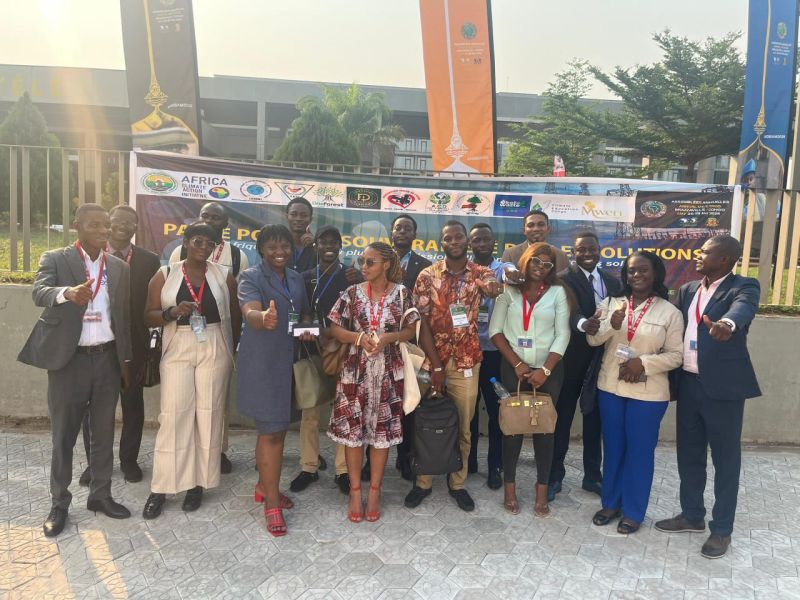
ACAI delegates and partners giving a thumbs-up in front of a coalition banner at the AfDB Annual Meetings 2026 in Brazzaville
FeaturedAdvocacy·

ACAI joins Global South partners at the AfDB Annual Meetings 2026 in Brazzaville

From Ghana's classrooms to a continental stage: an ACAI delegation travelled to Brazzaville, Republic of Congo, for the 2026 Annual Meetings of the African Development Bank Group.

Read full story

Held from 25 to 29 May 2026, the Annual Meetings brought together finance ministers, development partners, the private sector and civil society to discuss how Africa finances its future — including investment in water security, a lifeline for communities facing longer droughts and heavier floods.

ACAI stood alongside youth and civil-society partners from across the continent, united under the banner of the Interregional Pact for Sovereignty through Solutions — Global South. Our message was simple: climate finance must reach the schools, young people and communities who are already adapting on the front line.

Between plenaries and side sessions, our team listened, connected with new partners and shared lessons from our Green Schools and community resilience work in Ghana. We are bringing those conversations home — into our programmes and into the community voice briefs we share with institutions.

Children and caregivers gathered with delivered water, food staples and learning kits
Community·

Learning kits, safe water and heat-safety lessons for 120 children

A long stretch of extreme heat and unreliable rainfall this year pushed up the price of food and water for many families. For children's homes, which depend on steady support, the pressure was especially hard.

Read full story

Working with a children's home and its neighbouring school, ACAI volunteers delivered bottled drinking water, cereals, biscuits, rice and learning kits containing pens, pencils and sharpeners. But supplies were only half the visit.

Our facilitators also ran a short, interactive session on staying safe in extreme heat — drinking water regularly, resting in shade, recognising signs of heat exhaustion — and on storing water hygienically. Older children practised explaining the tips to younger ones, so the knowledge stays in the home.

"Climate shocks do not only damage crops. They push children out of classrooms," said a member of our programmes team. "Keeping children learning through a hard season is climate adaptation."

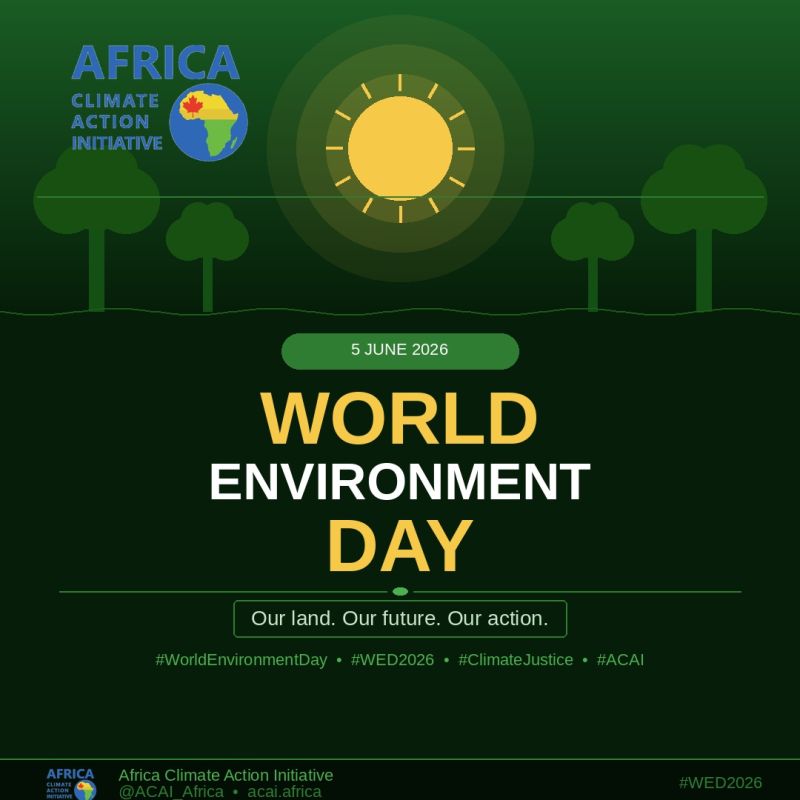
ACAI World Environment Day 2026 poster: 5 June 2026 – Our land. Our future. Our action.
Advocacy·

World Environment Day 2026: our land, our future, our action

On 5 June, ACAI joined millions around the world in marking World Environment Day — with a call to protect the land that feeds, shelters and sustains African communities.

Read full story

Our message for the day was three short promises: Our land. Our future. Our action. Healthy soils, trees and water sources are the first line of defence against heat, drought and flooding — and they are something every school and community can help protect.

We invited our volunteers, partner schools and Youth Climate Ambassadors to take one practical step: plant or adopt a tree, clear a drain, cut single-use plastic, or start a climate conversation at home.

Join the conversation with #WorldEnvironmentDay, #WED2026, #ClimateJustice and #ACAI — and explore simple actions in our Climate Hub.

A carpenter building wooden bookshelves for a school reading corner
Education·

How local artisans helped us build a school reading corner

A partner school had books but nowhere to keep them. The solution came from within the community.

Read full story

Instead of buying ready-made furniture from a city supplier, we commissioned a local carpenter to build shelves on site. Over a week, pupils watched the reading corner take shape — sanded, assembled and fitted to the classroom wall.

The shelves now hold storybooks, dictionaries and reference titles, along with our first climate and nature books. Teachers have introduced a weekly reading period and a "share the books with your classmates" rule that pupils enforce themselves.

Building locally cost less, supported a local livelihood and created real ownership. It is a model we will repeat in every Green Schools partner.

Participants of a youth climate dialogue standing together
Youth·

Youth climate dialogue brings 40 young leaders to one table

Students, apprentices, young farmers, parents and community leaders met to agree on local climate priorities.

Read full story

Held in a community hall, the dialogue opened with a simple question: "How has the weather changed since you were a child?" Elders described shorter rainy seasons and hotter afternoons; young people spoke about crops failing and flooding on the road to school.

In small groups, participants ranked the problems they most wanted to tackle. Three priorities emerged: planting shade trees around the school, better waste disposal to keep drains clear, and climate lessons for young people who are out of school.

Several participants have since joined our Youth Climate Ambassadors programme to lead those projects.

ACAI representatives with a senior officer during an institutional visit
Advocacy·

Engaging public institutions on climate-smart practices

Our team met institutional leaders in the Ashanti Region to explore practical environmental collaboration.

Read full story

Public institutions manage large areas of land and serve thousands of people. That makes them powerful partners for climate action. During a courtesy visit, ACAI representatives discussed opportunities for tree planting on institutional grounds, better waste management and environmental skills sessions.

The conversation was warm and practical. Both sides agreed to continue discussions on a small pilot that could show how institutions can lead by example on climate-smart practices.

Ballpoint pens and colourful pencil sharpeners
Education·

Why a pencil sharpener is a climate resilience tool

An opinion piece from our education team on the hidden link between climate shocks and learning.

Read full story

When a harvest fails, families cut costs. School supplies are often among the first things to go — and a child without a pen or exercise book quickly falls behind, or stops attending altogether.

That is why our learning kits are part of our climate work, not separate from it. Education is one of the strongest predictors of how well a household adapts to climate change. Keeping children learning through hard seasons protects their future resilience.

Small items — a pen, a pencil, a sharpener — can keep a learner in the classroom long enough to become the person who helps their community adapt.

Portrait of a member of the ACAI programmes team
Youth·

Team voices: why young women must lead Ghana's climate response

On International Women's Day, a member of our programmes team reflects on gender and climate.

Read full story

"Women and girls often carry the heaviest load when climate changes — walking further for water, managing households through food shortages, and leaving school when money runs short.

But they also hold deep knowledge about land, seeds, water and community. When young women are trained and trusted as leaders, whole communities adapt better.

That is why at least half of our Youth Climate Ambassadors are young women, and why we design sessions at times and places where girls can safely take part."

A young Ghanaian wrapped in the national flag
Advocacy·

Explainer: Ghana's coastline and the case for adaptation

Why coastal erosion matters to every Ghanaian — not only those living by the sea.

Read full story

Ghana's coastline stretches about 550 km, and roughly two-thirds of it is affected by erosion and flooding. Rising seas, stronger waves and the loss of protective mangroves are driving the change.

The impacts reach far inland: fish supplies that feed families across the country, roads and markets that connect regions, and cultural heritage sites along the shore.

Large engineering projects have a role, but so do communities. Protecting mangroves, avoiding sand mining and planning settlements away from high-risk zones are low-cost actions that work best when local people lead them. Learn more in our Climate Hub.

Be part of the solution

Climate action starts in our communities — and it starts with people like you.

Volunteer your skills, bring a climate workshop to your school, or partner with us to help African communities adapt, learn and lead.